

Psychiatrist or TMS Therapy: Which Mental Health Treatment Is Right for You?
Not sure whether you need a psychiatrist, TMS therapy, or both? Dr. Jocelyn Kelly Bayliss explains when traditional psychiatric care is the right fit, when TMS should be considered, and how Ivy Collaborative Healthcare in Augusta, GA offers both under one roof.
If you've been struggling with depression, anxiety, or OCD, you've probably asked yourself a version of the same question: Do I need a psychiatrist, or is there something else that could help? It's a fair question — and one that more people in the Augusta area are asking as newer treatments like Exomind TMS Therapy become more widely available.
The short answer is that psychiatry and TMS are not competing treatments. They address mental health from different angles, and in many cases, they work best together. Below, Dr. Jocelyn Kelly Bayliss — a double board-certified psychiatrist and the founder of Ivy Collaborative Healthcare in Augusta, GA — breaks down when each approach is appropriate, what the evidence says, and how to decide which path is right for you.
What Does a Psychiatrist Actually Do?
A psychiatrist is a medical doctor who specializes in diagnosing, treating, and managing mental health conditions. Unlike a therapist or counselor, a psychiatrist can prescribe medication, order diagnostic tests, and evaluate how physical health may be contributing to psychological symptoms.
At Ivy Collaborative Healthcare, psychiatric services include comprehensive evaluations, medication management, and ongoing treatment planning. Dr. Bayliss holds double board certifications in General Psychiatry and Child & Adolescent Psychiatry, bringing more than a decade of clinical experience to each patient interaction.
When Seeing a Psychiatrist Is the Right First Step
For most people experiencing mental health symptoms for the first time, a psychiatric evaluation is the appropriate starting point. You should consider scheduling a psychiatric appointment if you are experiencing:
- Persistent sadness, hopelessness, or loss of interest lasting two weeks or more
- Excessive worry or panic attacks that interfere with daily life
- Intrusive thoughts, compulsive behaviors, or rituals that feel impossible to control
- Difficulty sleeping, concentrating, or maintaining relationships due to emotional symptoms
- Thoughts of self-harm or suicide (if you are in crisis, call 988 or go to your nearest emergency room)
A psychiatrist can determine whether your symptoms meet criteria for a clinical diagnosis such as major depressive disorder or generalized anxiety disorder, rule out medical causes, and recommend a treatment plan that may include medication, therapy, lifestyle changes, or a combination.
What Is TMS Therapy — and How Is It Different?
Transcranial Magnetic Stimulation (TMS) is an FDA-cleared, non-invasive brain stimulation treatment that uses targeted magnetic pulses to stimulate nerve cells in regions of the brain associated with mood regulation. Unlike medication, TMS works directly on neural circuits without entering the bloodstream — which means it does not carry the systemic side effects (weight gain, sexual dysfunction, fatigue) that many patients experience with antidepressants.
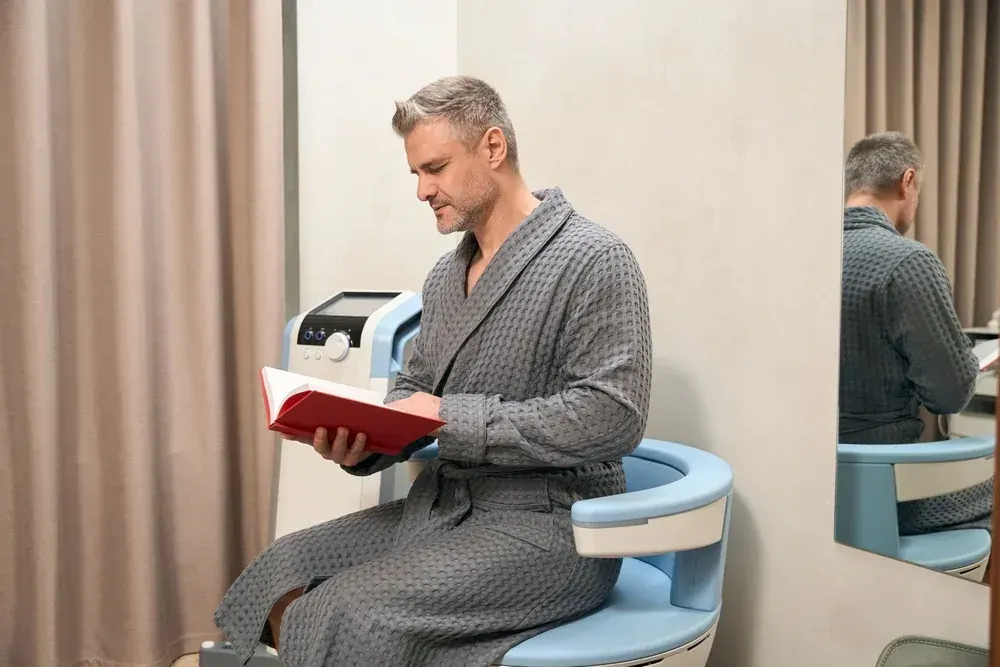
At Ivy Collaborative Healthcare, we use the Exomind TMS system, an advanced platform that is FDA-cleared for major depressive disorder in adults who have not responded adequately to prior medication. Outside the United States, Exomind has also received regulatory clearance for anxiety and OCD.
A standard Exomind TMS protocol involves brief sessions administered several times per week over a course of several weeks. Patients remain fully awake, require no anesthesia, and can return to their normal activities immediately after each session.
Psychiatry vs. TMS: A Side-by-Side Comparison
Understanding the differences — and the overlap — between these two approaches can help you have a more productive conversation with your provider.
| Psychiatry (Medication Management) | Exomind TMS Therapy | |
|---|---|---|
| How it works | Oral medications adjust brain chemistry systemically | Magnetic pulses stimulate targeted brain regions directly |
| Best for | First-line treatment for most mental health conditions | Treatment-resistant depression; patients who haven't responded to medication |
| FDA-cleared indications | Broad range of psychiatric conditions | Major Depressive Disorder (U.S.); anxiety, OCD (Canada/EU) |
| Common side effects | Weight changes, fatigue, sexual dysfunction, nausea | Mild scalp discomfort or headache during treatment |
| Onset of improvement | Typically 4-8 weeks for full effect | Some patients notice improvement within 2-3 weeks |
| Systemic effects | Yes — medication circulates throughout the body | No — localized to targeted brain regions |
| Ongoing commitment | Daily medication, regular follow-up appointments | Time-limited course of treatment (several weeks) |
When Should You Consider TMS Instead of — or in Addition to — Medication?
According to research published by the American Psychiatric Association, TMS is recommended for patients with treatment-resistant depression — generally defined as major depressive disorder that has not responded adequately to at least one or two trials of antidepressant medication at appropriate doses and durations.
The evidence supporting TMS for this population is substantial. A multicenter study found that TMS was significantly more effective than switching to another medication for patients who had already failed prior drug trials. Research compiled by the National Institutes of Health indicates that approximately 50-60% of patients with treatment-resistant depression experience clinically meaningful improvement with TMS, and roughly one-third achieve full remission.
You may be a candidate for TMS if:
- You have been diagnosed with major depressive disorder and have tried at least one antidepressant without adequate relief
- Side effects from psychiatric medications are significantly affecting your quality of life
- You prefer a drug-free or medication-minimizing approach to treatment
- You are looking for a targeted treatment with fewer systemic side effects
Importantly, TMS does not have to replace psychiatry. Many patients continue working with their psychiatrist while undergoing TMS, and some find that TMS allows them to reduce their medication dosage under medical supervision.
Why It Matters That Both Options Are Available Under One Roof
One of the challenges patients face when exploring mental health treatment is fragmented care. You might see a psychiatrist at one practice, get referred to a separate TMS clinic across town, and spend weeks waiting for records to transfer and treatment plans to align.
At Ivy Collaborative Healthcare, Dr. Bayliss provides both comprehensive psychiatric care and Exomind TMS Therapy within the same practice. This integrated model means your treatment decisions are made by the same physician who knows your full history, your response to prior treatments, and your personal goals. There is no referral delay, no duplicated intake paperwork, and no communication gap between providers.
This collaborative approach also makes it easier to combine treatments when appropriate. For example, a patient with moderate-to-severe depression might begin with a psychiatric evaluation and medication trial, and if the response is insufficient after an adequate trial period, Dr. Bayliss can seamlessly introduce TMS without the patient having to start over at a new practice.
What About OCD?
While the FDA clearance for TMS in the United States currently focuses on major depressive disorder, TMS has received regulatory approval for OCD in Canada and the European Union. Research continues to investigate TMS protocols for OCD, and some patients with OCD symptoms that have not responded to medication and cognitive-behavioral therapy may benefit from TMS as part of a comprehensive treatment plan.
Dr. Bayliss evaluates each patient individually to determine whether TMS is a clinically appropriate option based on their specific diagnosis, symptom severity, and treatment history.
How to Decide: A Practical Framework
If you're unsure where to start, consider the following:
- If you've never been evaluated by a psychiatrist: Start there. A thorough psychiatric evaluation is the foundation of any evidence-based treatment plan. Dr. Bayliss can assess your symptoms, rule out other medical conditions, and recommend the most appropriate first-line treatment.
- If you've tried medication without sufficient improvement: Ask about TMS. You may be a candidate for Exomind TMS Therapy, which has strong evidence for treatment-resistant depression.
- If medication side effects are a significant concern: Discuss TMS as an alternative or complementary option. Because TMS is non-systemic, it avoids many of the side effects associated with oral medications.
- If you want the most comprehensive approach: Consider a practice that offers both. Having psychiatric care and advanced brain stimulation therapy under one roof — as Ivy Collaborative Healthcare does — ensures continuity of care and more personalized treatment planning.
Take the Next Step
Whether you're experiencing symptoms for the first time or have been managing a mental health condition for years without the results you want, you don't have to figure it out alone. At Ivy Collaborative Healthcare in Augusta, GA, Dr. Jocelyn Kelly Bayliss provides both expert psychiatric evaluation and FDA-cleared Exomind TMS Therapy — giving you access to the full spectrum of evidence-based mental health treatment in one location.
Call (706) 364-3461 or visit our contact page to schedule your consultation.